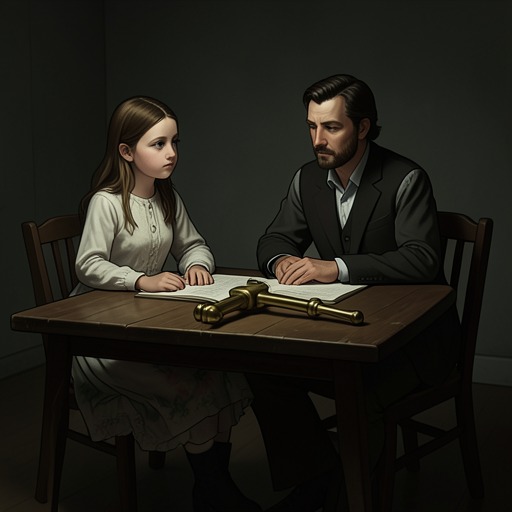
Phyllis
Made for LovePhyllis, Hazel’s mother, is a vivid presence in the story despite appearing through Hazel’s memories rather than in the present-day action. Her influence takes shape in two sharply drawn childhood scenes: an art-gallery lesson that defines reality as life, and an elaborate lecture about cookies and nutrition that Hazel quietly evades. Later, as Hazel faces the deaths of both parents, Phyllis becomes part of the emotional measure by which she tries to understand mortality, care, and the value of an ordinary human life.
Identity and Presence
Phyllis is identified through Hazel’s recollections of her mother and through Hazel’s reference to her father’s experience of her treatments. The available memories show a parent who spoke with force and invention, making lessons memorable by turning abstract ideas into images Hazel could not easily forget. Phyllis’s influence is not presented as a simple set of beliefs Hazel accepts. Instead, her words remain vivid because Hazel remembers both their imaginative force and her own resistance to them.
Her physical absence is registered in small domestic details. Years after her death, Hazel encounters bath products that had probably belonged to her mother and had remained unused. The products surface while Hazel is trying to bathe Diane, a rubber doll, and she uses shower gel to make the unsettling scene seem more festive. The old supplies connect an improvised present-tense act to a household history that has not vanished with the person who once lived in it.
Lessons About Reality and Care
One of Hazel’s defining memories of Phyllis begins at an art gallery. As a child, Hazel had assumed that art was supposed to be beautiful; confronted with paintings she found ugly, she asked what it meant to look attentively at something that was not pretty. Phyllis answered, “That is called L-I-F-E.” The lesson does not dismiss beauty so much as refuse to make beauty a condition for attention. Looking, thinking, and remaining with what is difficult to see are themselves part of living.
That memory returns amid the bodily distress of Hazel’s father’s decline. Hazel hears a wail from his bedroom and later enters to find his mouth open and frozen. The gallery lesson gives this painful scene an interpretive echo: life is not made meaningful only by what is pleasant to witness. The connection is not an easy consolation. It makes the reality Phyllis named immediate and intimate, while leaving Hazel to face what that reality demands of her.
A second childhood memory makes Phyllis’s care more comic and coercive. When Hazel was caught with her hand and arm in the cookie jar, her mother ordered her to freeze and launched into an extended argument that broccoli was like a hundred-dollar bill for the body, while a cookie was like Monopoly money. In Phyllis’s imagined scenario, Hazel’s body tries to buy calcium for its teeth, only to discover that it has been given fraudulent currency. The lecture turns nutrition into a whole moral economy, complete with a distressed body and an unsympathetic checkout clerk.
Hazel’s memory preserves the gap between the sermon and its result. While Phyllis spoke, Hazel scraped chocolate and cookie crumbs beneath her fingernails so she could eat them later, after being sent to her room. Her private maneuver does not erase the care behind the warning, but it prevents the scene from becoming a story of simple obedience. Phyllis’s elaborate attempt to persuade her and Hazel’s resourceful evasion survive together: the lesson is remembered, but so is the child who found a way to keep the crumbs.
Illness, Death, and Family Memory
When Hazel asks her father whether he is giving up because of her mother, she specifically raises what he saw during Phyllis’s treatments. The question shows that her mother’s treatment remains part of the family’s understanding of illness and of the choices her father is making. The available scene does not explain what he witnessed or establish that it caused his decision; it shows Hazel testing that possibility as she searches for a reason she can accept.
Later, Hazel thinks of Phyllis among the deaths that make the prospect of technological life extension feel tragic rather than simply promising. Her father’s approaching death forces her to consider whether tending to someone through the end of life can possess value in itself. Against that uncertainty, Phyllis’s death is neither an abstract precedent nor a resolved lesson. It is one of the losses Hazel carries while trying to affirm that a finite human life can matter.
Narrative Role
Phyllis is characterized through remembered speech, domestic objects, and Hazel’s present-day acts of attention. The memories range from the comic precision of the cookie lecture to the stark economy of the art-gallery answer; their contrast keeps Phyllis from being reduced either to a scold or to a source of wisdom. Her influence is strongest where the story leaves the lessons unsettled: Hazel remembers the words, remembers disobeying, and later has to test their meaning against illness and death.
The structure also makes inheritance tangible. A phrase about reality returns as Hazel confronts her father’s failing body; old bath products remain in the home after their owner is gone; a childhood sermon persists alongside the memory of secretly saving crumbs. Phyllis’s significance lies in this continuing presence within Hazel’s perception. She cannot make loss beautiful or explain it away, but her remembered insistence on looking at life gives Hazel a language for facing what is not beautiful.